• Spy Bubble Introducing SpyBubble
    Track EVERY Move Your Partner, Employee or Child is Making Using Our POWERFUL Cell-Phone Monitoring Technology.
Showing posts with label Podcast. Show all posts

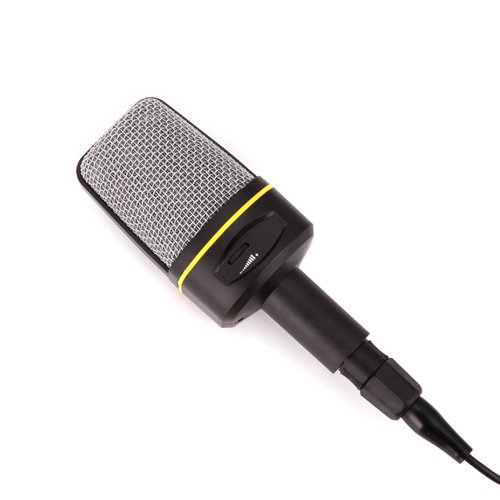
HDE® Podcast Microphone w/ Stand

HDE® Podcast Microphone w/ Stand Review


Special Prices: check special prices now!


HDE® Podcast Microphone w/ Stand Overview


Are you the next Justin Bieber? Find out with this high quality studio microphone made specifically for recording vocals and acoustic instruments. Sing on you tube for all to hear, or use just to practice before American Idol Tryouts. Get yours today and become famous!


HDE® Podcast Microphone w/ Stand Feature


  • High performance microphone accurately reproduces sound with noise cancellation
  • No batteries required; device is powered by any your PC's 3.5mm jack
  • Size: 6" / 15.2cm; Color: Black
  • Package Contents: 1 x Studio Quality Microphone; 1 x Tripod
  • HDE® is a registered trademark and is the only authorized seller of HDE branded products


B006JMZ1OIASIN


B006JMZ1OI


HDE® Podcast Microphone w/ StandItem Brand


HDE


Product Information and Prices Stored: Apr 24, 2012 12:34:15

IPods and Podcasting for Learning and Gross sales Enablement

The Company Podcast Push

What do Duke University, IBM, Capital One, Newsweek and Barenaked Ladies all have
In widespread? Answer: they're all reaching out to workers, college students, and clients with
A new and highly effective software - podcasting. You may have heard about podcasting from
Your kids or on the information, however podcasting is far more than some phenomenon
Started by the rock and roll or techy crowd. Podcasting is a powerful communication
Device being used to reach global and cell audiences, save people time and, most
Importantly, actually join with their audiences in news ways - in right this moment's
Communication/message glut. However let's take a look at what podcasting is, who's
Utilizing and why it is so efficient for both business and individuals.

First, we'll take a look at the size and scale of the podcasting phenomenon...

-- A recent study by the Pew Internet and American Life Mission discovered that more than 22 million American adults personal IPods or and MP3 player and 29% of them have
Downloaded podcasts or listened to podcast which have been "pushed" to them. That
Equates to six million people listening to podcasts. Market researchers and analysts
Proceed to buoy up podcasting's future with newest figures suggesting a US
Audience alone of 56 million by 2010.

-- Jupiter Research not too long ago predicted that US digital music participant sales would
Develop to 56 million by 2010, up from 16.2 million in 2004 and by 2010, three-
Quarters of all individuals who own transportable digital music gamers will hearken to podcasts,
A growth from lower than 15% final year.

What is podcasting?

Whether or not you describe it as the best communication software since email, or as an
RSS feed for audio, podcasting is an approach to "push" audio content to subscribers for
Virtually zero cost. Podcasting allows anybody (me, you, IBM, or NBC) to post audio
Content material that will get pushed to any subscriber's desktop and then directly to their iPod
Or MP3 player. That is global. Anybody, anywhere can "tune in" to your podcast and
Study what you must offer or say. You do not have to be NBC with a global
Distribution infrastructure. Now folks can "subscribe" to a podcast and have new
Content "pushed" out to them without them having to surf the net, download MP3s
Or burn CD's.

Ideas/Stories/Voices ? Audio/MP3 ? Web ? PC ? MP3
Player

All the arrows go in a single direction. Once someone has subscribe to your podcast,
Your content get "pushed" out to them. There is no such thing as a handing over to stations with
Podcasting. You don't have to visit an internet site to search out streaming podcasting. Podcasts
Show up (pushed) when new content material is produced. If you are a subscriber, you get
The podcast right then. All you need is an IPod or MP3 participant of any variety for
Listening, thus the phrase podcasting.

The time period "Podcasting" is derived from the iPod (Apple Computer's widespread system
For playing compressed audio records data) and "broadcasting." Podcasting permits for audio
Records data that will have been previously downloaded and performed on a personal
Laptop to be automatically downloaded and listened to on moveable music enjoying
Units (such as the iPod and other MP3 gamers).

Having originated on the earth of running a blog, some have even referred to podcasting
As "audio blogging." For many, podcasting is a logical subsequent step from blogging. As
Business Week Senior Author Stephen Baker observes, "The guts of the podcasting
Movement is in the world of blogs, these thousands and thousands of private Net pages that have
Turn out to be a global sensation. In a blogosphere that has grown largely on the written
Word, podcasts add a soundtrack."

Now that you realize what a podcast is, let's take a look at where they come from: who is
Producing the "pushed audio content."

Who's producing podcasts?

The reply is extensive ranging. Teenagers, techies and rock musicians were early
Adopters. At present you see the likes of Rush Limbaugh, Business Week, ESPN and information
Programs of every type producing, distribution and advertising podcasts. The quantity
Of podcasts available is rising at a really fast pace. In late 2004, there were close
To 500 podcasts available. Right now there are over 10,000 totally different podcasts to decide on
From.

Now that podcasting has becoming more mainstream, corporate and non-company
Organizations are stepping into the act, utilizing podcasting to connect with customers,
College students, employees and partners. Here are some examples:

-- Duke College handed out iPods to their complete 2005 freshman class so they
Might obtain podcasts that included college information, class work and social content.

-- Capital One University has handed out over 3000 iPods to support corporate
Coaching and communications. This includes, leadership coaching, sales, buyer
Service and different topics.

-- IBM has created podcasts to point out their thought management to customers
Investors and prospects.

-- Keane Inc. has handed out over a hundred iPods to their international gross sales pressure to share
Training, prospects' tales and organizational content.

Why have these and other organizations gotten into podcasting? They have gotten
Into it as a result of they know their audience (whether inner or external) is inundated
With textual content-based mostly content: emails, articles, the online portals, and advertising messages.
Podcasting permits them a novel medium to succeed in and connect with their audience.

IPods shall be part of Duke University's new Duke Digital Initiative (DDI). "We've been
Focusing on iPods and other cellular computing, however our wider objective is to integrate
Expertise broadly into the educating and learning course of," said Peter Lange, Peter
Lange, the university's provost and senior tutorial officer. "The iPods have helped
Jump-begin this process, and we plan to maintain pushing ahead."

Listeners love podcasting as a result of it delivers rich content material directly to them, in a type
That enables them to save time, control what they hear and listen to whereas
Commuting, working or every time it really works for them. Now not is learning tied to a
Book, PC display screen or internet portal.

Content material is still king in any communication, especially recorded podcasts. Podcasting
Is the supply tool. Compelling content ensures steady listening and never a flip
Of the ability swap or turn of the dial.

Should you podcast?

Podcasting is not reply to all of your learning and communication problems. As great
As audio is, like every medium, it has its limits. Whereas audio allows customers to multi job,
It isn't easily scanned - which suggests you contemplate the listeners needs very
Carefully. You could provide value.

Corporate podcasting is different that individuals or media podcasting. The
Customary for a company podcast is way greater than for particular person or media. Your
Employees and prospects anticipate certain out of your communication with them. You'll be able tot
Simply provide lengthy-winded rants, self-serving commercials or cute content. It's all about
Value. When producing that worth, ask yourself; who and how will you produce your
Podcast? Who will evaluate it and how? Will you get it transcribed? There are legal
Issues to consider as well.

Regardless of these issues podcasting will be simple. After getting determined your
Format and established a course of the entire process will get a lot easier. Nonetheless
Podcasting takes a proactive effort, a planned strategy, artistic improvement and
The braveness to attempt new things. But in case you have the braveness, and are keen to put the
Front-finish work into it podcasting and cellular audio can present large benefits. If
You would like to:

-- Reach a world audience

-- Join with that viewers in a brand new and effective ways

-- Save your viewers time

-- Share the fervor, experience and stories of what you are promoting

...attempt podcasting - it really works!

Samson SAC01UPAK USB Microphone and Podcast Package


Samson SAC01UPAK USB Microphone and Podcast Package


Samson SAC01UPAK USB Microphone and Podcast Package

Samson SAC01UPAK USB Microphone and Podcast Package


By : Samson


|


List Price : $234.99

Our Price : $126.65


You Save : $108.34 (46%)


In Stock

Cheap Samson SAC01UPAK USB Microphone and Podcast Package on our site now. We will ship to your house for free. Admission is free. Reduction prices from Amazon, click below for more detail.


Samson SAC01UPAK USB Microphone and Podcast Package


Product Features : Samson SAC01UPAK USB Microphone and Podcast Package


  • Industry's first affordable USB Studio Condenser mic
  • Plugs in directly to any computer with a USB input
  • Cardioid Pickup Pattern
  • Large 19mm Diaphragm
  • USB connection cable included

Ready at Amazon Check Price Now!


Producing a Podcast

So you've decided to create a podcast. You're all set to star in your own show. There's only one problem. You've heard about regular broadcasts and you're wondering what is involved in producing a podcast. After all, regular broadcasts have producers so shouldn't podcasts?

Don't worry. Producing a podcast isn't as difficult as it seems at first glance.

First off let's answer the question of what is producing. And then we'll get into the tasks involved.

So what is producing a podcast? Simply put anything that isn't on air is considered producing. All the technical and management functions are part of the production aspects. Even the selection of talent would be considered production. Although with a podcast of course the talent is sort of a given!

So what are the tasks involved?

There are six basic tasks involved in producing a podcast.

1. You need to start with a target audience in mind. Everything you do has to be done to attract and retain your target audience. In order to do that you need to develop a profile of the audience you want to attract.

2. You need to determine the format of the podcast. There are several possible formats of podcast from interview to columns to a single class. Each of the formats has its advantages and its disadvantages. You need to pick the one that suits your customer best and requires the least amount of effort on your part.

3. You need to write the podcast script. Depending on the format this may in fact involve many different scripts. However, on the other hand it may also involve a level of scripting that is essentially the same as the script design.

4. You need to record the audio. There's two parts to this. The physical recording of the audio is definitely a production task. The actual audio being recorded is typically considered part of the performance rather than the production. The separation is arbitrary really. Both pieces need to come together to produce a podcast.

5. You need to edit and package the audio. This is really two different tasks that are performed at the same time. Editing the audio involves removing errors and dead air in order to give a polished podcast. During that process music and bridge audio is typically added to give the podcast a professional sound.

6. You need to distribute and market the podcast. The final task in the production of a podcast is getting it into the hands of your audience. This consists of two different but related tasks. The second is marketing which is simply making the audience aware of the podcast. The first is distribution which can take many forms. Some of which are indistinguishable from marketing efforts.

Do you want to learn how to create information products (learning content)? Check out my new free eBook "7 Myths and Seven Tricks in Nine Steps": http://www.learningcreators.com/myths.htm

Do you want to read more free information like this? Go to my blog: http://www.learningcreators.com/blog/

Glen Ford is an accomplished consultant, trainer and writer. He has far too many years experience as a trainer and facilitator to willingly admit.


View the original article here

Producing a Podcast - Determining the Format

So you've decided to produce your own podcast. Good for you Podcasts are a tool that every information or learning content product marketer should be aware of. And probably should be involved with.

Podcasts can help you build your reputation. They can help you build traffic. They can help you connect with your audience. They can help you get your message out.

And podcasts come in many flavors.

Which is where the problem comes in. How do you decide which format you want to use?

Of course, choosing your format is complicated. Here are five basic questions you need to ask when determining the format for your podcast.

1. What is your audience's favored format?
Everyone has a format that they prefer to have information presented in. Especially when we are discussing the format of an entertainment alternative... which is the way podcasts are used. Determining the preference can be difficult but it can be done. And once you've determined the preference, it is always smart to follow your audience's preferences.

2. What is your favored format?
The reverse of course is also true. Each of us has a format which we are most comfortable working within. Maybe you prefer to teach. Or maybe you prefer to just comment. Or maybe you prefer to have a conversation with someone. Or maybe you prefer to answer questions. Maybe you're most comfortable doing a little of each. Your own preferences will affect the choice of a format. After all, you need to be comfortable with producing the podcast.

3. What formats are available to you?
There are times when you can choose from all the formats. But what happens if you can't find someone to interview? What if there isn't anyone else in your niche? What if no one in your niche is willing to be interviewed? What if you have a very limited niche and free teaching would eliminate too much of the material you are hoping to sell? Sometimes some formats just can't be used.

4. What is the best format to accomplish your objectives?
Podcasting is a tool. And like any other tool it needs to be used with purpose. What are your objectives in producing a podcast? Are you looking to build your reputation as an expert? Teaching might work best for that. Are you looking to build traffic? A column format might do the best job for that. And so on.

5. How long can you maintain that format?
Like any other product, podcasts have a life span. You run out of material. You run out of ideas. You run out of audience interest. The life span of your format needs to be taken into account. After all, you don't want your podcast to exceed the life span of your audience's interest.

Do you want to learn how to create information products (learning content)? Check out my new free eBook "7 Myths and Seven Tricks in Nine Steps": http://www.learningcreators.com/myths.htm

Do you want to read more free information like this? Go to my blog: http://www.learningcreators.com/blog/

Glen Ford is an accomplished consultant, trainer and writer. He has far too many years experience as a trainer and facilitator to willingly admit.


View the original article here

Producing A Podcast - Start With The Audience

Every once in a while someone will come up to me and say something along the lines of "I want to have a podcast but I don't know where to start."

My response is usually "Great. Who's your audience and what are you going to say?"

And usually the response is something like a blank look and "Well, I figured I'd talk about... since that's what I'm selling." At which point I have to stop them and explain that they are ahead of themselves.

You've got to start with your audience.

You see that's one of the biggest mistakes that new internet marketers (especially information marketers) make -- they start with their product. But information marketing needs to be a niche marketing endeavor. And the word niche refers not to your product but to your customer.

When creating learning content (aka an information product) -- and a podcast is a form of learning content -- you always need to start with the audience.

Why?

Because your audience is going to be buying your podcast. They may not be paying for it with dollars (although that would be nice). But they will be paying with their most valuable asset -- their time. And you need to provide them with value for their time. Or they aren't going to be interested in downloading or listening. And they shouldn't be.

You also need to be able to motivate your audience. You need to convince them not only to download your podcast but also to listen to it. You need to convince them that this is a must have, must listen podcast. You need to convince them that not only is it valuable to them but it's absolutely necessary for them.

The way to motivate your audience to listen is by picking topics based on what motivates them. It sounds simple. And it is. You need to identify what their biggest and most immediate problem is. You need to identify what they are afraid may happen. And you need to identify what they are hoping will happen. And you need to identify what is at the front of their minds at the moment. What has their immediate interest.

But of course, that's not all you need to do.

You also need to solve, avoid or achieve. That's right you need to solve their problem with your topic. Or you need to show them how to avoid the pain that they are afraid of. Or you need to show them how to achieve their dreams.

But to do that means you need to know them.

Do you want to learn how to create information products (learning content)? Check out my new free eBook "7 Myths and Seven Tricks in Nine Steps": http://www.learningcreators.com/myths.htm

Do you want to read more free information like this? Go to my blog: http://www.learningcreators.com/blog/

Glen Ford is an accomplished consultant, trainer and writer. He has far too many years experience as a trainer and facilitator to willingly admit.


View the original article here

Producing a Podcast Quickly

Podcasts are a repeating learning content product. They can be very effective for that very reason. After all, the more times a message is heard the more likely it is to be believed.

But that can cause problems for the unwary information product marketer.

The biggest problem from podcasts is that they need to be created at least once a week. Which can become an unwieldy task.

In order to prevent podcasts from overwhelming the learning content product marketer with work, you need to produce a podcast quickly. Fortunately, it can be done without too much effort or specialized knowledge.

Here are seven tips for producing a podcast quickly.

1. Practice, practice, practice.

It might seem counter-intuitive but practice will actually speed up your process. Everyone makes mistakes. Recording your practices helps your editor to replace those mistakes, saving you the need to re-record portions. Practice also helps you to do something that professionals avoid -- winging it.

2. Lose the script.

Professionals use scripts and effectively become readers. However, because you are so involved it really isn't efficient or effective to use a formal script -- unless you make a lot of errors. It is however, a good way to make it easier when you start -- because you'll make a lot of errors. So start off using a formal script but as quickly as you can move to using an outline as your script.

3. Steal a trick from the assembly line.

The theory behind the assembly line is that of the batch. By creating a batch of the same product you become more efficient. With podcasts there are two parts to applying this. First off, you should do all your podcasts together. Doing a month's worth of podcasts at one sitting makes life much easier. Secondly, do all your writing together. Then do all your recording. Then do all your editing. This allows you to create a rhythm to your work.

4. Create series not singles.

When writing scripts it's always easier to create a series of podcast columns rather than one whole podcast. For example, you might have a series of seven tips on how to create a podcast quickly (sound familiar). A summary of the seven (or maybe the introduction) might form one column, and then each tip would be a separate column. If you have four columns in your podcast stagger the solution. Effectively you'll have half the writing to do each month.

5. Keep it short and sweet.

One of the tendencies you'll find is to keep expanding the size of your podcast. Why? Because you have too much to say for each. You need to fight that tendency. Pick a time and keep to it. If a column has too much information then cut it back until it has just the right number of points.

6. Do a column format.

It's always faster and easier to write and record short pieces than it is to do long pieces. A column format allows you to keep each piece below two or three minutes. Let's say that you want to do a 15 minute podcast. To do a single column you'll need about fourteen and half minutes of content. That's roughly fourteen points! But let's say you split that into four columns. Each of the columns needs to be only 3 minutes long. That's roughly two points. Much faster and easier to write.

7. Keep an ideas log.

One of the problems with any repeating product such as a podcast or article marketing is coming up with ideas. One of the techniques to use to help with this is to keep an ideas log. This will prevent you wasting time trying to come up with something to talk about.

Do you want to learn how to create information products (learning content)? Check out my new free eBook "7 Myths and Seven Tricks in Nine Steps": http://www.learningcreators.com/myths.htm

Do you want to read more free information like this? Go to my blog: http://www.learningcreators.com/blog/

Glen Ford is an accomplished consultant, trainer and writer. He has far too many years experience as a trainer and facilitator to willingly admit.


View the original article here

Producing a Professional Podcast

Every once in a while, I'll be asked what needs makes a professional podcast professional. Creating a professional sounding podcast is important when trying to build credibility. Amateurish podcasts tend to make you come across as amateurish. However, a strongly professional podcast will make people automatically presume that you are worthy of respect. In essence, a professional podcast will borrow credibility from radio which like television provides an automatic level of credibility.

So how do you make your podcast sound professional?

Here are five characteristics of a professional podcast and what you need to do to produce the same result.

1. The content is relevant and interesting to the audience. Professional broadcasts spend ridiculous amounts of money surveying their audience and working hard to ensure that the content they are providing is relevant and interesting to their audience. The reason they do this is simple. Your audience will judge the quality of your podcast based on the relevance of your material to themselves.

2. The announcer is confident and practiced. Even professional broadcasters make mistakes. They read a sentence out of order. Or their mouths have problems forming the words. Despite this, they persevere and finish the work. Your presentation needs to be just as polished and your ability to overcome issues will be judged.

3. The recording quality is excellent. Most broadcasters invest in high-end recording equipment. Far more expensive equipment than a normal podcaster is capable of ascending. However, the equipment you need is still able to produce high enough quality records that is suitable for impressing your audience.

4. The material is well organized and focused. When just winging it there will always be a tendency to go off into irrelevant discussions. And the argument you are trying make won't be as clear and precisely focused discussion on the topic at hand. A professional broadcast knows what the audience wants to hear and therefore they are specific, focused and clear in the organization of their material.

5. The podcast is finished or packaged. We've become used to packaging in a professional broadcast. What do I mean by packaging? Each podcast needs to begin with a set of introductory credits, and a list of what will be covered in the podcast. Similarly, the podcast needs to end with a set of closing credits. These credits need to include music to help the audience feel connected. Finally, transitions between elements should also include a musical transition.

Do you want to learn how to write a book in 24 hours? Take my brand new free course here: http://www.learningcreators.com/

Do you want to read more free information like this? Go to my blog: http://www.learningcreators.com/blog/

Glen Ford is an accomplished consultant, trainer and writer. He has far too many years experience as a trainer and facilitator to willingly admit.


View the original article here

Putting Together a Professional Podcast

One of the things you always want to do if you are hoping to sell learning content is to appear professional. Everything you do has to be polished. Everything you do has to look like you know what you are doing.

That includes your podcasts.

People are used to listening to professional broadcasters on the radio and on television. This is the standard you need to meet when creating your podcasts. Fortunately, with modern computer technology it is quite possible to make your podcasts polished and professional sounding.

Here are seven tips you can use to help put together a professional podcast.

1. Always edit your podcast if only to remove the dead air. No one is 100% perfect. In fact, you don't want to be perfect with your podcasts. However, you also don't want to be focused on getting it right while you are recording. And everyone leaves dead air at some point or other. So use editing to correct your mistakes and don't worry about it during the recording session.

2. Volume isn't as important as having a consistent volume. Notice that when you listen to the radio only the commercials are at a different volume. People sometimes obsess over getting just the right volume level. But that's why the audience has a volume control on their headsets and computers. The one thing that you need to focus on is not perfection but consistency. All your podcasts recording need to be at the same level so that if you patch them together your audience doesn't always have to adjust the volume control.

3. Plan your podcast first. Every once in a while someone will get it into their head that they can just wing it. Don't bother. You'll just be disappointed with the results and have to spend more time recording it and editing it. Planning doesn't necessarily mean writing a full blown script. It can be as simple as listing all the points you want to raise. If you do the outline method aim for one point for every minute to speak (or one minute of talking per point if you prefer).

4. Practice, Practice, Practice. One of the characteristics of a professional podcast is a polished and professional broadcaster. The only way to become polished is to practice. Either that or be born as a naturally talented public speaker. Which isn't very likely.

5. Use music to your advantage. Have you ever wondered why they use music in movies? Have you ever listed to a movie before they've added the music? Listen to a professional radio news magazine. They use music to transition. They use music to introduce. And sometimes they even use music to set the tone.

6. Find a theme. No I'm not talking about a unifying topic to your podcast -- although that's a good idea too. I'm talking about a musical phrase that will be used for all your podcasts -- especially for the opening and closing credits.

7. Always have opening and closing credits. If you listen to a radio news magazine (the BBC and CBC both produce good ones), you'll find they have an opening and closing segment for each podcast. In the opening segment they introduce what segments they will be providing and who is involved. In the closing segment they provide who worked on each segment (recording, producing and editing). You need to do the same thing.

Do you want to learn how to create information products (learning content)? Check out my new free eBook "7 Myths and Seven Tricks in Nine Steps": http://www.learningcreators.com/myths.htm

Do you want to read more free information like this? Go to my blog: http://www.learningcreators.com/blog/

Glen Ford is an accomplished consultant, trainer and writer. He has far too many years experience as a trainer and facilitator to willingly admit.


View the original article here

Ten Simple Steps to Setting Up Your First Podcast

As a business owner or professional, you'll be looking for ways for effective and cost-effective ways to expand your business. Podcasting is an excellent way to promote your business or provide added value for your clients. They can help you build your list of actively interested followers and enhance your professional reputation and authority within your field.

In this article, I'll be showing you how you can make a professional level podcast in ten simple steps without needing to be a computer wizard.

Let's begin with a brief explanation of a podcast.

A podcast is simply a digital media audio file (called an MP3 file) or video file that is available on the internet for downloading and playback on a mobile device such as an iPod or other MP3 player, laptop, tablet or desktop computer. This flexibility allows the listener to listen to a podcast wherever they choose - at home, whilst travelling, or at work. Knowing this, you can create content that's appropriate to the different environments or aspects of a listener's life-style.

There are many programs available that will help you create a podcast but for our example we are going to use the most popular, that is soundcard.com. Once you've gained familiarity with the process, look around at other options that appeal to you.

So let's get started!

Step 1: First you'll need to check that your audio and/or video file is in MP3 format. If the file isn't in MP3 format then use a file converter. All you need to do is use specific software which allows you to convert and encode sound files on PC and Mac. It's very quick and easy to do so don't be put off if this is what you need to do.

Use your search engine to run a search on something like "file converting mp3" and a list of free or commercial software providers will lead you to the right choice for you. Within a few minutes of starting, you'll be able to turn your content into an appropriate file type.

If your audio/video file is all ready to go then move onto step 2.

Step 2: Set up a FREE account at soundcloud.com

Soundcloud's free account has storage limits, but once you reach your limit, you can upgrade for a small fee. Setting up an account is a quick and simple process with clear instructions to take you through each step. It took less than 5 minutes to set up my account and complete my profile.

As you're creating podcasts for professional and business reasons, create a username which reflects your brand correctly and include your photo or company logo image for your profile. It's best as with all things social media, to up a different account for more personal material...

Once your account is active, upload your MP3 (that is, follow instructions that allow the file to be copied from the computer onto their server). Once the MP3 is uploaded make certain that you make the file public, downloadable, and that you adjusted the settings so that you have activated it for widgets.

So far, so good... now for step three

Step 3: If you don't have a blog already you can go to a site like blogger.com and setup a free blog/podcast account. Once you have activated your account you're ready to start posting. Now we need to link your audio file to your blog so that it appears as a new post.

Step 4: If you're using blogger, to start posting click on "Start Posting", then click "Settings", and then click "Formatting". Once under the formatting tab look for the "Show Link Field" make sure this field is set to "Yes" and save the settings.

Step 5: Now click on the "Posting" tab to return to the blog, and then click on "Add a new post". Once under "Add a new post" give the post a title and then paste in the URL link for the podcast from soundcloud in the "Link" box.

Here you can also write a description of the podcast in the main body of your post - don't forget to use strong keywords to make the most of your search engine optimisation (SEO) potential. When you're finished, click "Publish".

For wordpress, depending on your template, you should be able to see icons by the box where you would type in a new entry. By the icons you should see "upload/insert". Select either audio or video depending on the file you want to add to your blog.

For the final stages, we need to set up the feed for your podcast so that people can subscribe to it. Again, it's a simple process and I've chosen a popular service called feedburner.com to do this.

Step 6: Go to feedburner.com and either setup a new account (if you've Google account use it to log in).

Step 7: Once you've logged in, paste the URL from your blog post into the "Burn A Feed Right This Instant" section, then click "I'm a podcaster", and then click "Next".

Step 8: Now you want to give your feed a title and address, then click "Next". Again, to make the most of this SEO opportunity, ensure you've used the strong and relevant keywords. Once you've submitted this information, it can't be changed so do spend a few minutes thinking about what you type.

Step 9: That's it; your podcast feed is now live and ready for downloading. Well done! But before you're completely finished, there's just one last important step to complete.

Step 10: By ensuring your podcast process is iTunes friendly, you'll allow your audience to select your content from one of the world's largest resources. Indeed, there is an expectation that your podcast will be available through this outlet.

To make that happen, just click "Next" on the Congratulations page. This screen will allow you to choose several options that will make your podcast iTunes friendly - click "Next" when done. This screen will also let you track different stats from your podcast and is worth setting.

Well done, you've set up your podcast in ten steps!

In around half an hour, you provided yourself with the tools you need to share your podcast with a global audience. To add more episodes just simply follow the above steps again, but as there's no need to set up another account, just log in. Don't forget your feed address is the address set in Step 8

Sumi Olson is a sales & marketing professional with over 20 years' experience. If you want to satisfy your publishing or writing aspirations, meet your sales, marketing & management objectives, or achieve your social media & online marketing targets, then Sumi Olson can give you the hands-on tools and knowledge you need.

To get in touch or read more on how she can help you, just connect with her on LinkedIn http://uk.linkedin.com/in/sumiolson or visit http://www.olsonservices.co.uk/.


View the original article here

The Benefits of Starting a Podcast

So you're thinking about starting a podcast, are you? Good for you! You really won't go wrong by starting podcasting. You'll find that you'll be very happy with that decision and probably sooner that you think. But why?

What are the benefits of starting a podcast? Why should you start one?

In this article I'm going to share just four of the reasons - four of the benefits. But there are a lot more than just this.

1. You can sell your podcasts as a product. Most podcasts aren't sold. And there are a number of reasons why you might not want to. However, you can still make money from your podcasts. For example, there is no reason that they can't be combined into a set of CDs (or MP3s if you want the online equivalent) and sold as a collection of podcasts. Or even edited together into a short course on a common topic.

2. Podcasts help you to build a reputation. Because they are focused on you presenting knowledge, the content itself is an excellent way to build your recognition as an expert. But there's more than that. Podcasts are repeating media. Each week there is a new chance for you to show off your knowledge. A new chance for you to establish yourself as an expert. Because of this repeating over and over and over podcasts are an excellent tool to help you establish yourself as an expert. In fact, unless you are singularly incompetent it's almost inevitable that you'll be perceived as an expert in your field.

3. Podcasts help you to build traffic. One of the advantages of a podcast is that it is repeating. Every week people will return searching for your podcast. Why? Because they know that there is new, useful content that they want to experience. So rather than a single visit you are constantly adding new listeners to your existing listeners.

4. Podcasts take up less time and effort than other marketing tools. Videos are complex. Not only do you need to get the content and the audio correct but you also need to get the video correct. Producing a single 10 minute video can take up to two days. Writing articles is simple. But you need lots of them. In fact, you need so many of them that you really can't afford to do them yourself. But podcasts are simple. A complete month's worth of podcasts can be taken from concept to recorded podcast in less than two days of work.

Do you want to learn how to create information products (learning content)? Check out my new free eBook "7 Myths and Seven Tricks in Nine Steps": http://www.learningcreators.com/myths.htm

Do you want to read more free information like this? Go to my blog: http://www.learningcreators.com/blog/

Glen Ford is an accomplished consultant, trainer and writer. He has far too many years experience as a trainer and facilitator to willingly admit.


View the original article here

Tips to Making a Professional Podcast

One of the things you always want to do when creating content is to make it look professional. Or, in the case of a podcast, make it sound professional. After all, a professional podcast is the measuring stick your audience is going to use when they grade you. And they will.

But how do you make your podcasts sound professional?

In this article I'm going to share seven tips to making a professional podcast. Now let's get something clear from the beginning. Hiring a sound studio is not in the budget. In fact, none of these tips require much money. Sounding professional can now be done with the barest of budgets.

1. Always start with a plan!

Podcasts are usually a simple form of learning content. Like any learning content they don't just appear. At least not if they're good. Always plan your podcast for what content and format you'll use. Organization needs to be built. It doesn't just appear. In other words, write an outline before you script the show!

2. Don't make it up as you go!

It may sound like professionals make it up as they go. But that's what makes them professionals. Practice! Specifically practice at making it sound like the script being read is really an off the cuff speech. Even if you only work from an outline, always have a script. And then practice it.

3. Get a head start!

How many times have you heard people on a voice chat where you hear their kids playing in the next room? Usually better than you hear them! That's the result of using the wrong microphone. Don't use a desktop microphone. Desktop microphone bad! Headset microphone cheap. Headset microphone good. Yes, there is a technical explanation. But bottom line use a headset -- even a five dollar one is better than a twenty dollar desktop!

4. Take it on the chin!

Want that deep rumbly voice that all good radio broadcasters have? The voice of doom... even if you aren't planning a career on a ranch! Move the microphone to just below your jaw line. Say half an inch below your closed jaw or at the bottom of a stretched open jaw. Well out of the way of your mouth and the pops and sputters.

5. A different view of the bar stool!

How many bar stools have you seen the underside of? Too many? Okay this one's easy. When you record you should always stand up. If it's going to be a long recording session, use a bar stool. Just perch on the edge of it. That'll take the weight off your feet. But you'll still get the lung expansion that standing gives you.

6. Smile -- the audience will wonder what you're up to!

Sorry, this one is a little obvious. Smile when you are recording. It sounds silly but your audience can hear if you like them. So smile! You do like having an audience don't you? Tell them with your smile.

7. Spit shine and boot black.

What makes a professional sound like a professional? A good editor. Don't worry about mistakes. Just record enough material to give the editor something to work with. Record all your practice sessions. Then edit your podcast. Clean up the mistakes. Add music. Add audio packaging. You'll be surprised how good a little editing will make you sound.

Do you want to learn how to create information products (learning content)? Check out my new free eBook "7 Myths and Seven Tricks in Nine Steps": http://www.learningcreators.com/myths.htm

Do you want to read more free information like this? Go to my blog: http://www.learningcreators.com/blog/

Glen Ford is an accomplished consultant, trainer and writer. He has far too many years experience as a trainer and facilitator to willingly admit.


View the original article here

Two Business Models for Making a Podcast

Historically, making a podcast has been about marketing for services, and the vast majority of producers distribute free podcasts. Other media providers, online radio stations, news sites that offer media to subscribers, or the online music industry general have strong business models. Podcasting differs. Podcasting has not traditionally had a business model.

The free podcast problem is not difficult, and podcasting differs in several key ways from other media areas.

First, making a podcast involves the physical transfer of a file from the host to the user's computer vice providing a streaming sound file that cannot be saved without difficulty and work.

Second, individuals who make podcasts are, for the most part, individuals who are not in the media business per se and thus may not consider it a primary vehicle to their underlying business..

Finally third, and this is an advantage, the underlying cost of making podcasts is very small in comparison to media outlets.

If you think blogging is still the hottest innovation to think technology, then you are missing the impact of the new social media and 4G technology. Why would you settle for writing about something when you can talk and/or show people something. Blogging is a thing of the past, and everyone is now looking forward visual information at their fingertips.

Making a podcast can even be used to make money over the Internet. If you're wondering how some people are able to turn their podcasts into revenue-generating machines, you will be surprised that it isn't as complicated as it sounds.

There are two basic business models: 1) making a podcast to leverage your product/service/website or, more simply to help drive traffic to your website; and 2) as a service provider. Someone who can leverage the podcast technology to help others.

As stated above, 4G technology, the iPhone/Droid, iPad, etc are providing mechanisms to communicate beyond the simple blog into a dynamic interaction where purchases are immediate. Having the ability to provide that service, will put you in demand for companies (store front or e-commerce) who want to leverage the technology but don't have the knowledge or means.

Another advantage of the service model is that, since it can help the store front business, the potential for clients to your service may just be down the street. This is a market in which you may find little competition. After all, a local presence to a local store front is preferable to trying to find a service.

If you are interested in podcasting, checkout our free Podcast Profits CD.

Bill Atteberry is President of Atteberry and Associates, LLC, a consulting company in the software process and e-commerce markets. You can get information about our Local Marketing Institute.


View the original article here

Using Free Audio Programs to Spruce Up a Podcast

No one is perfect, not you, not the most professional broadcaster on the planet. No one. That's why editing exists. To polish your product by removing the weak points. To make your product perfect even if you aren't.

And it doesn't take a lot of money.

In fact you can download the tools you need for free. Yep, for free. There are a lot of articles on the net trying to sell you free audio editing programs. As if that weren't a bit of a contradiction in terms -- sell and free!

Audio editing is a fairly straightforward and mature tool. And most of the software will do the job sufficiently well. To find a program do a Google search using "free audio editing software" as your search term. Personally, I use WavePad (free) and sometimes Nero (not free) however, Audicity is also well thought of and is open source.

In this article rather than talk about the tools, I'm going to concentrate on the four tasks that you will need to do to spruce up a podcast.

1. The first thing you will need to do with an audio editor is to fix your own mistakes. When you are recording your podcast you may have a tendency to try to do everything perfectly the first time. Trust me -- you're not superman! Relax. You are going to make mistakes. Get over it. The editor is the person who is responsible for creating a perfect podcast. Your responsibility when recording is to give him enough material to do his (or her) job.

Mistakes generally fit into four groups. The first is dead air. Especially if you are working on a point level script you will have periods where you can't think of the right word. So you say nothing. Which works when you're on stage but doesn't work when you're only on audio.

The second mistake is what I call the lightly tripping tongue. That's when you try to say one word, get it mixed up with another and end up saying something entirely unrelated to either. Usually well garbled, I normally blame this on rented lips but feel free to blame it on a lack of coffee or any other excuse you wish.

The third mistake is related to our society's lack of vocal censorship. I'm talking about the occasional use of inappropriate language of course. Even the occasional swear word is inappropriate for a podcast unless you are very intentional in its use!

The fourth is results from not using a professional recording studio. I'm talking about the occasional poor sound quality. If you are constantly fixing the sound quality then you need to identify where and why the quality is being disrupted. However, if only occurs infrequently you may prefer to leave it to the editor to fix.

2. The second thing you can use audio editing software to do is change the size and characteristics of the audio file. Most of us record the original in a far higher quality than we really need. And the size of the file reflects that. Audio editing software can allow us to reformat the audio track into a more appropriate size, quality and format.

3. In movies and television, music is an extremely important and powerful tool used to create mood and emphasize elements of the content. The same thing applies in a podcast. You can use audio editing software to add music to help your podcast create the appropriate mood.

4. In a movie or on television there are two parts that always appear -- the beginning credits and the ending credits. Audio also has variations of these. Sometimes called packaging these chunks of editing help your audience to prepare for the show or to absorb what has been said. In any case, they definitely give your podcast a polished, professional sound.

Do you want to learn how to create information products (learning content)? Check out my new free eBook "7 Myths and Seven Tricks in Nine Steps": http://www.learningcreators.com/myths.htm

Do you want to read more free information like this? Go to my blog: http://www.learningcreators.com/blog/

Glen Ford is an accomplished consultant, trainer and writer. He has far too many years experience as a trainer and facilitator to willingly admit.


View the original article here

What is a Podcast? 5 Things You Didn't Know

Podcasts are an excellent tool for building your credibility. Podcasts are easy to create and flexible to use. If you're not using them in your information business you are missing out on a powerful, traffic generating tool.

But there are probably a few things you don't know about podcasts.

Here are five things you may not know. Some of them are very old and anyone who is new to podcasts may not know them. Some of them are related to using podcasts and unless you use podcasts you may not know them. And of course, despite the title, some of them you may know. Sorry, but since I don't know what you do know I can't guarantee that you won't know them.

1. The term podcast comes from a contraction of the words iPod and broadcast. An iPod is a type of MP3 player from Apple. Early iPods only played audio. Now of course, video is also available. Podcasting originated with radio broadcasts which were recorded and then posted to a website for downloading. Originally they included information and music broadcasts but with the rise of internet radio, the term podcast has shifted to imply an information broadcast. They also predated the term.

2. Podcasts don't have to be perfect. There are two reasons for this. First, it's a live broadcast. Even the professionals don't get through a full radio broadcast without making mistakes. You will be forgiven. Second, it isn't live. That means you can edit it and make corrections on the editing room floor. Well actually on the computer but the tape ends up on the floor and... No, I am not going to explain what tape is. It's an old way of recording. I'm old. It's old. Don't worry about it! Editing room floor means you can fix it on the computer during the editing process.

3. You can create a podcast by recording a teleseminar and then posting the recording on your website in an MP3 format. What makes it a podcast rather than a recorded teleseminar? A new podcast recording is available on a regular basis a teleseminar can appear whenever you wish to do it. So if you run a regular teleseminar and put it up as a recording -- you're actually podcasting!

4. You can also create a podcast by using the audio track from a video recording. The editor has the ability in most editing programs to pull out the audio track into a separate track. This can then be saved separately. With a small amount of re-editing -- actually repackaging -- you can use this audio track as a podcast.

5. Podcasts make a great product. If you transcribe them they can become the basis for articles for your marketing. If you add audio packaging around them -- and sometimes combine them -- you can sell them as CDs or online products. If you add PowerPoint slides you can use the podcast as the audio track for a video or DVD product.

Do you want to learn how to create information products (learning content)? Check out my new free eBook "7 Myths and Seven Tricks in Nine Steps": http://www.learningcreators.com/myths.htm

Do you want to read more free information like this? Go to my blog: http://www.learningcreators.com/blog/

Glen Ford is an accomplished consultant, trainer and writer. He has far too many years experience as a trainer and facilitator to willingly admit.


View the original article here

What to Avoid During a Podcast Release

Podcasts can be a very powerful tool for improving your credibility. For improving your traffic. For improving your reputation as an expert. For your information marketing business as a whole.

Everyone who is relying on the sale of books, courses, coaching and other courseware should be at least considering podcasting.

But they aren't perfect. And there are things that you can do that will make them even less perfect. Here are six things for you to avoid during a podcast release.

1. Probably the most common root issue is trying too hard to be perfect. Many new podcasters hear more experienced podcasters and believe that they need to be perfect in their delivery and their recording of their material. Nothing could be further from the truth. That's what the editing or polishing process is for. Turning a set of imperfect recordings into one almost perfect recording. Besides, you want people to know you not the perfect you!

2. Podcasts are only useful if they have listeners. I remember a Sunday School song that went "Hide it under a bushel? No! I'm gonna let it shine". Like this little light you need to bring your podcast out from the bushel and let it shine. No one is going to listen to it unless you market it. You need to have a plan in place to get traffic to it. You need to get listeners. Unless you do, the work you've put into your podcast will have been wasted.

3. The other side of the coin is over-marketing. Not everyone is going to be interested in your podcasts. That's fine. Some people don't like podcasts. Some people don't like free information. And if you're selling your podcasts that just means there are more people who don't want to listen. You need to be careful that you don't over market your podcast and drive your customers away. In short, don't bug your email list about the podcast.

4. We all tend to focus on our own lists when marketing. That's natural. These are people that have already said they are interested in our products. But with a podcast, that's a big oops! After all, one of the benefits from podcasts is an increase in traffic. And if you only market to your own customers you're kind of missing the point! So be sure to identify in your marketing plan how you are going to get the word out to people who haven't heard of you before. Don't forget affiliates, search engines and podcast hosts. They are all good sources of potential traffic.

5. Don't overpromise in your podcast. Let's face it we all tend to get a little passionate about our products. We all tend to get into the sales terminology game. The best! The newest! The whatever superlative term you can think of! Be careful of this. Don't overpromise and underdeliver. Be sure your listeners return next week!

6. Don't forget that your podcast isn't a one time thing. For most types of product we create one and then go off on other duties. With a podcast you are releasing an ongoing product. Sort of like a subscription monthly membership program. You need an ongoing marketing program. Don't get so caught up in the release that you forget that you need to continuously market your podcast.

Do you want to learn how to create information products (learning content)? Check out my new free eBook "7 Myths and Seven Tricks in Nine Steps": http://www.learningcreators.com/myths.htm

Do you want to read more free information like this? Go to my blog: http://www.learningcreators.com/blog/

Glen Ford is an accomplished consultant, trainer and writer. He has far too many years experience as a trainer and facilitator to willingly admit.


View the original article here

What's Needed For a Podcast?

Podcasting is one of those tools, like article marketing, that is very powerful, easily done and very effective. In fact, it's one of those techniques that almost any learning content marketer should be doing as a matter of course.

So why aren't more people creating podcasts?

Could it be because they believe that creating a podcast is difficult, expensive or time consuming? Based on some of the questions that I receive the answer is yes. Many people believe that you need an audio studio in order to create a podcast. And that it is hard to create one.

You don't and it isn't.

Podcasting is easy to do and requires only the minimum of tools. So what's needed for a podcast? There are really only six things that are required to produce a podcast.

1. A computer.

In an audio studio, you have electronic devices called mixing boards. That's one of the reasons it is so expensive to rent an audio studio. Fortunately, you don't need mixing boards any longer. A computer and the appropriate software is all that is required. A complex, up-to-date, high priced computer? Nope. In fact, if your computer can run any of the latest three generations of operating system, it's big enough to do the job. And if truth be known, the only reason older computers can't do the job is because they can't run the operating system!

2. A headset microphone.

The biggest determinant of your podcast's recording quality is the microphone. No, you don't need a professional quality microphone. Just the right type. Desktop and built-in microphones just won't do the job no matter how much you spend on them. A ten dollar headset microphone on the other hand will create a recording you can be proud of.

3. Audio editing software

This is the reason you need a computer to record a podcast. And why you don't need a mixing board and multiple recording devices. Audio editing software now provides a level of flexibility that only the biggest and best recording studios were able to provide. Most frightening of all is that several of the software tools are free. Audacity is one free tool that is frequently recommended.

4. Royalty free music

Creating a professional sounding podcast requires four things: A reasonable quality recording of the announcer, introductory credits, transitions, and closing credits. The last three are characterized by the use of background music. In fact, that's all a transition is. It's a short musical phrase that's used to separate segments of the podcast. You could have a custom piece recorded for you. However, there are a number of free or low cost solutions available over the internet. Just be sure that the music you use is provided royalty free -- meaning you can use it without having to pay a royalty each time you play it.

5. Time

Okay, creating podcasts is easy. It doesn't take a lot of money. It doesn't take a lot of knowledge. It doesn't take a lot of equipment. It does, however, take some time. Not a lot, but some. It takes time to write record and edit the podcast. If you schedule one day a month and do all your podcasts at once, you can easily create a month's worth of podcasts in a single day.

6. Ideas

I'm convinced that this is one of the major reasons people who know how to create podcasts don't do it. Having a repeating product like a podcast does require you to find ideas for the podcast. A three segment podcast for example would require you to identify twelve to fifteen article ideas per month. This may seem like a lot of different ideas to come up with. But if you try it, you'll find that it really isn't that difficult.

Do you want to learn how to create information products (learning content)? Check out my new free eBook "7 Myths and Seven Tricks in Nine Steps": http://www.learningcreators.com/myths.htm

Do you want to read more free information like this? Go to my blog: http://www.learningcreators.com/blog/

Glen Ford is an accomplished consultant, trainer and writer. He has far too many years experience as a trainer and facilitator to willingly admit.


View the original article here

Why a Podcast is Just As Good As a Viral Video

There is a lot of talk about video marketing and viral videos today. While I have no problem with video, there is far too much emphasis on viral videos. At least as far as marketing your information and training products goes.

You'd be better off with a podcast than a viral video!

Okay, that's a lot more controversial than I usually get. It's almost as bad as my statement that self-help gurus really need to learn how to create products first before they teach it! So I guess I better explain. The first one, not the second... I'll leave the latter to other articles.

So why is a podcast just as good as a viral video?

First off, what's so great about a viral video? And more importantly what is a viral video? To answer the last question first -- a viral video is a video that has gone viral, Duh! Okay, let's explain a little further. To go viral means that the product (video, audio, blog, eBook, whatever) has so touched the audience that they start forwarding it to their friends. Who, in turn, forward it to their friends. Like a virus it spreads out exponentially.

So what's so great about them? The answer is simple. It's seen by a lot of people. Some of whom might click through and check out your site, where you can collect their emails and engage them in a conversation. Hey, you might even be able to sell to them someday!

However, that's also why a viral video isn't as good as a podcast. A viral video is seen by a lot of people -- once! And only once! It's a fad that will in time burn down. Think of the last viral video that you viewed. Who was it by? Unless you just watched it just before you started reading this article, chances are you've already forgotten. Viral videos have no staying power. Without repetition, little is gained by each viewing.

Viral videos focus on quantity over quality. Be seen by a large number of people and at least a few will click through to your site. You hope.

Podcasts on the other hand are repeating products. Not only do they show up but they repeatedly put your name and voice in front of your customer. This repetition improves retention and makes a click through far more likely.

Podcasts also provide repeated exposures to your customer. Bluntly the customer learns to like you long before they bother to click through. As a result your sales percentage and opt-in percentages will both exceed that of a viral video. Podcasts are more than just a traffic tool. They are a sales tool.

Of course, nothing is preventing your podcasts from going viral. Although in reality, it is a lot less likely it will. In which case, you'll see some of the same issues arising. Although because a podcast is repeating by nature, you will see less of a loss in your sales and opt-in percentages.

Finally, there is one big advantage to a podcast. Most videos are limited in length. YouTube only allows a maximum ten minutes of video. But podcasts can be as long (or as short) as you wish! So you can say more, inform more and sell more.

Do you want to learn how to create information products (learning content)? Check out my new free eBook "7 Myths and Seven Tricks in Nine Steps": http://www.learningcreators.com/myths.htm

Do you want to read more free information like this? Go to my blog: http://www.learningcreators.com/blog/

Glen Ford is an accomplished consultant, trainer and writer. He has far too many years experience as a trainer and facilitator to willingly admit.


View the original article here

Why Should I Podcast?

First of all you should know that a podcast is a series of media files that are audio or video recorded and released on to the internet. These can either be downloaded for the iPod, and other media devices, including the personal computer. Podcast are a delightful and simple way to get the words out that you are trying to get to your targeted audience. By creating a podcast you will be informing others of information that you would like to share. Whether this information is for a blog, a business, or your own personal opinions; it is able to be downloaded and listened to anywhere and everywhere by those whom are interested. Before you decide to podcast there are a few things you should consider.

Your Product or Opinions:
Depending on your product or the reason you are going to be having a podcast is a very important thing to consider. Are you trying to sell a product of yours? Are you trying to get your company well known for its many services? Or are you simply trying to get your opinions out there about social situations, and other things? No matter what you are trying to do with your podcast, you should be sure that you have chosen your theme for the first podcast and stick with that theme throughout the rest of your podcast.

Reaching Your Target Audience:
Who is your Target Audience? Who exactly are you trying to get your message to? This is a very important thing to consider when you are deciding to create a podcast. By knowing who your target audience is, you will be able to increasingly reach your customers or listeners. The more you can relate to them, the more often they will continue listen. By being yourself and adding your own spin on your podcast, you will be personalizing more with your listeners. This will help you reach them in a way almost as if you were physically there talking to them, compared to text.

An Inexpensive Way To Get You Out There:
If for some reason you cannot seem to afford some advertising, or another way to get your product or services out there. Podcasting is a low cost way to get it done. All that one would need in order to even begin a podcast is a simple microphone and a simple recording program. This is very cost efficient and will hardly cost you any thing, if you already have a built in microphone in your laptop. Once you have recorded your informational podcast simply find a site that will host it and place it on your website or blog to begin.

Over all these are three basic reasons that you should start podcasting. By giving yourself a podcast, you are giving yourself potential to so many new clients and listeners. Have yourself be heard, and get yourself out there. Before you have made your decision to start your podcast, be sure it.

Fred Meek is a professional Austin SEO consultant in Austin Texas. For more information go to Austin Search Engine Optimization.


View the original article here

Why You Need A Script For Your Podcast

Every once in a while I'll run into people who believe that you can just create a podcast without thinking about it first. After all, they say, listen to the radio. These guys just show up and start talking. How hard can it be?

The answer is very hard!

Want a broadcasting secret? All those broadcasters who sound really comfortable speaking around the music? You know the ones who read the news? Or who do interviews? Most of them are reading scripts. And not just the type of script that I suggest you use for a podcast. Formal, detailed, word by word scripts.

So why do they use scripts?

And why should you use a modified version of a script?

In this article I'm going to explain why you need a script for your podcast.

First off, podcasts are a short but repeating learning content product. Essentially every week you need to produce fifteen minutes to half an hour of teleseminar.

To make the process of creating podcasts efficient you need to actually record several of them at one time. You also need to write them in a batch. So for example you might write one set of four podcasts one week. Then the week you might record them. And the third you might edit them. That way you are able to get the advantages of creating an assembly line. If you don't create a script then you won't be able to get the advantages this implies. You'll need to determine what you are going to talk about and record it immediately. Which means you need to set up for recording once for every recording rather than once every four weeks.

While podcasts are short don't underestimate them. For a fifteen minute, four segment column format (which is represents the least amount of script effort), you need to have roughly 12 points. Each segment will need to be about three minutes long which corresponds to roughly 3 points. That means you need to write the equivalent of a 1200 word essay every week. Doesn't sound as easy when it's put that way does it?

Professional broadcasters use full scripts because it allows them to say their piece without having to worry about what they are going to say while they are trying to say it. By writing a script for your podcast, you will avoid the embarrassment of not having anything to say.

Professionals also use a script so that they can practice what they are going to say before hand. That way they can perform flawlessly -- or almost so. You too need to practice your speaking. By writing a script you will have be able to repeat and polish your podcast.

Do you want to learn how to create information products (learning content)? Check out my new free eBook "7 Myths and Seven Tricks in Nine Steps": http://www.learningcreators.com/myths.htm

Do you want to read more free information like this? Go to my blog: http://www.learningcreators.com/blog/

Glen Ford is an accomplished consultant, trainer and writer. He has far too many years experience as a trainer and facilitator to willingly admit.


View the original article here

powered by Blogger | WordPress by Newwpthemes | Converted by BloggerTheme